Award-winning restaurant featuring authentic, unique, Italian and Mediterranean cuisine.
Address
Info :
Follow Us
Award-winning restaurant featuring authentic, unique, Italian and Mediterranean cuisine.
Address
Info :
Follow Us
Not all private event restaurants deliver the same experience. Learn what actually matters when selecting a venue that matches your celebration's needs and your guests' expectations.

Before you fall in love with a venue’s photos or menu, you need to know one thing: does the space physically work for your group? A private event restaurant might look stunning, but if your 40 guests are crammed into a room built for 25, nobody’s enjoying themselves. On the flip side, 15 people scattered across a space designed for 60 feels awkward and empty.
Start with an honest headcount. Not the “maybe” list—the realistic number of people who will actually show up. Most events see about 20 to 30 percent of invitees decline, so factor that in early. Once you have your number, ask the restaurant how many guests their private space comfortably accommodates for a seated dinner versus a cocktail reception. These are different configurations, and the capacity changes depending on how you’re using the room.
The goal is a space where people can move, mingle, and sit without feeling squeezed or isolated. A venue that’s upfront about capacity limits and helps you visualize the layout is already showing you they understand what makes an event work.

Guest lists shift. People cancel last minute, unexpected plus-ones appear, and sometimes your “firm” headcount isn’t as firm as you thought. The question is whether your chosen private event restaurant can handle those changes without derailing your plans.
Ask about policies upfront. Does the venue require a guaranteed minimum number of guests? If your final count drops below that minimum, are you still paying for the full amount? What happens if more people show up than you anticipated—can they accommodate a few extra seats, or is the room maxed out? These aren’t hypothetical concerns. They happen at nearly every event, and knowing the answers before you book saves you from scrambling later.
Some restaurants build in a small buffer—typically around three to five percent—to account for minor fluctuations. That means if you guarantee 40 guests, they might prepare for 42. It’s a smart practice that protects both you and the venue. But not every restaurant operates this way, so don’t assume. Get clarity on how they handle changes, what the cutoff date is for finalizing your count, and whether there’s flexibility if your numbers shift after that deadline.
The best private dining restaurants understand that events are fluid. They work with you to adjust within reason, communicate clearly about what’s possible, and don’t penalize you for circumstances outside your control. If a venue is rigid or vague about these policies, that’s a red flag. You want a partner who’s prepared for reality, not just the ideal scenario.
Capacity numbers only tell part of the story. How a private event restaurant configures the space matters just as much as how many people it holds. A room that seats 50 people at long banquet tables feels completely different from the same room set up with smaller rounds. The layout shapes how your guests interact, how easily servers can move through the space, and whether the event feels intimate or chaotic.
When you visit a venue—and yes, you should visit in person—pay attention to the flow. Can guests move comfortably between their seats and the bar or buffet? Is there a natural gathering spot for cocktails before dinner, or will everyone be standing awkwardly in the entryway? Are tables spaced far enough apart that conversations don’t overlap, or is it so tight that pulling out a chair requires coordination with three other people?
Ask the restaurant if they offer different seating configurations. Some private dining spaces can adapt—removing a few tables to open up a dance floor, creating a mix of high-tops and standard seating for a cocktail-style event, or arranging a long family-style table for a more communal vibe. Flexibility here is a good sign. It means the venue has experience hosting different types of celebrations and knows how to adjust the space to match your vision.
Don’t forget about accessibility. If any of your guests use mobility aids or have other accessibility needs, confirm that the private dining area is easy to reach and navigate. The last thing you want is a beautiful space that half your guests can’t comfortably access. A restaurant that proactively addresses these details without you having to push for answers is one that takes hospitality seriously.
Want live answers?
Connect with Tartufo for fast, friendly support.
Food is the centerpiece of any restaurant event, but it’s also where things can go sideways fast if the venue isn’t prepared to accommodate your guests’ needs. A private event restaurant should offer more than a one-size-fits-all menu. You need options, flexibility, and a willingness to work with dietary restrictions that are increasingly common at every gathering.
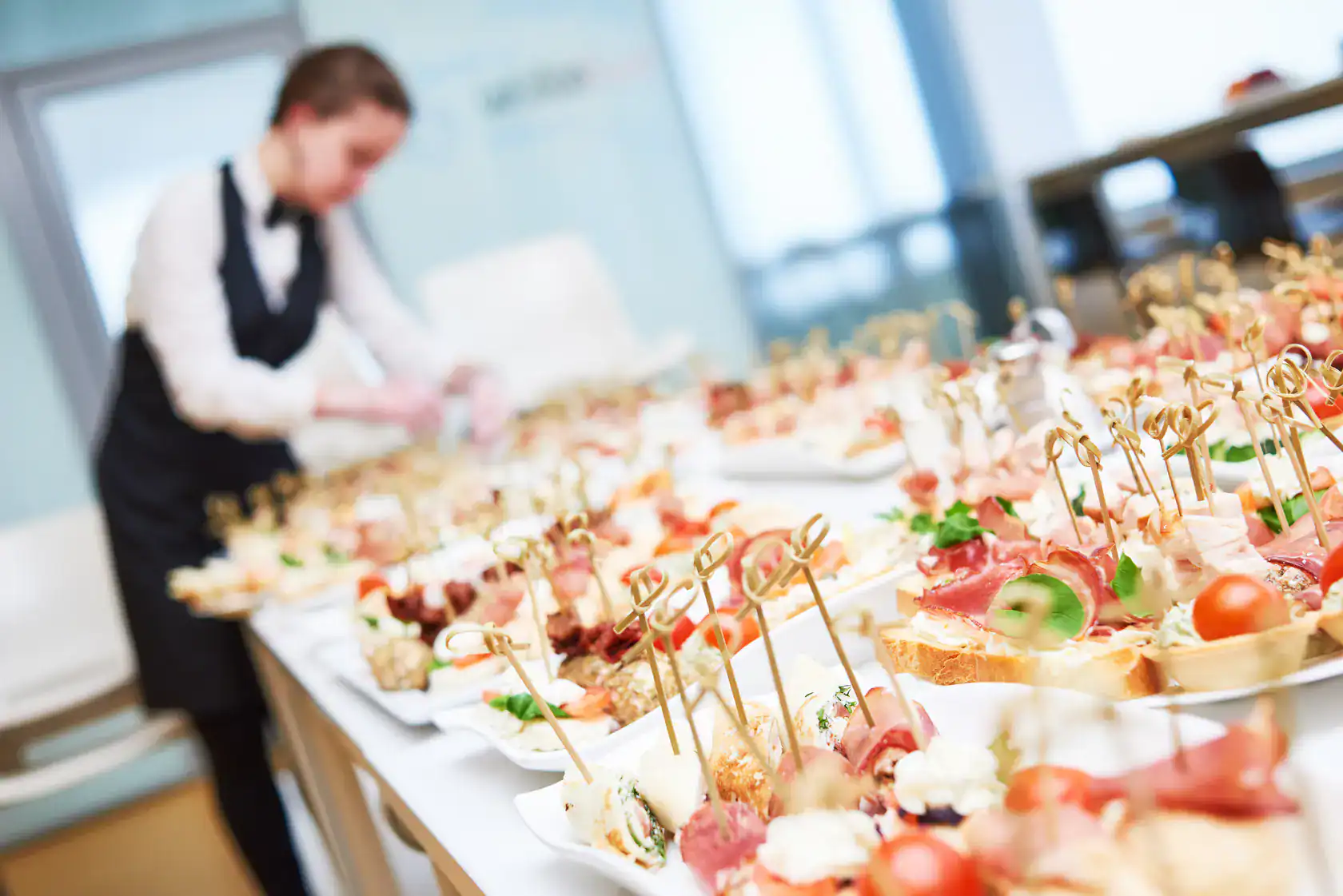
Start by asking whether the restaurant offers customizable menus for private events. Can you build a meal around your group’s preferences, or are you locked into a preset package? Some venues offer family-style service where large platters are shared at each table. Others do plated courses or buffet setups. Each has pros and cons depending on your group size, the formality of your event, and how much variety you want.
Then there’s the dietary restriction conversation. Vegetarian, vegan, gluten-free, dairy-free, nut allergies—these aren’t edge cases anymore. They’re standard considerations, and a good private dining restaurant treats them that way. Ask how they handle special dietary needs. Do they require advance notice? Can they prepare separate dishes, or do they modify existing menu items? The goal is to ensure every guest at your event has something satisfying to eat, not just a side salad while everyone else enjoys the main course.

Reading a menu online is one thing. Tasting the food is another. If you’re serious about a particular private event restaurant, schedule a tasting or visit for a regular meal before you book. You need to know whether the quality matches the descriptions and whether the flavors align with what you want your guests to experience.
During your visit, pay attention to more than just taste. How are the dishes presented? Are portions generous or skimpy? Does the food arrive at the right temperature? These details matter because they’ll directly impact your event. If the kitchen struggles to execute during regular service, it’s not suddenly going to perform flawlessly when preparing meals for your entire party at once.
Ask about the sourcing and preparation methods. Restaurants that use fresh, high-quality ingredients and prepare dishes to order tend to deliver more consistent results than those relying on pre-made components or cutting corners to save costs. You don’t need to interrogate the chef, but a few questions about how they approach their cuisine will tell you a lot about their standards.
Also, discuss timing. How long does it typically take to serve a multi-course meal to a private group? Will there be awkward gaps between courses, or is the pacing smooth? A well-coordinated kitchen and service team can make a three-hour dinner feel relaxed and enjoyable. A disorganized one turns it into a test of patience. If the restaurant has experience with private events, they should be able to walk you through their typical service flow and give you confidence that your meal will be well-executed.
One of the biggest advantages of hosting a private event at a restaurant is the ability to customize the menu to fit your celebration. Whether you want to highlight specific dishes, incorporate a theme, or simply ensure there’s something for everyone, the right venue will work with you to create a dining experience that feels personal.
Start the conversation early. Share your vision for the event, any specific dietary needs you’re aware of, and whether you have preferences for service style. A collaborative restaurant will offer suggestions based on their strengths, guide you toward dishes that work well for groups, and flag potential issues before they become problems. For example, some dishes don’t hold up well when prepared in large quantities, or certain ingredients might not be available during your event date. A transparent kitchen team will tell you this upfront rather than letting you discover it the hard way.
Ask about tastings or menu previews. Many private dining restaurants offer the opportunity to sample dishes before finalizing your selections. This isn’t just about confirming you like the food—it’s about seeing how the kitchen executes under conditions similar to your event. If they’re preparing multiple dishes simultaneously for a tasting, you’re getting a realistic preview of what your guests will experience.
Be clear about your budget constraints. A good restaurant will help you build a menu that delivers quality without exceeding your spending limit. They might suggest family-style service to maximize variety while controlling costs, or recommend seasonal ingredients that are more affordable and flavorful. The goal is a menu that impresses your guests and respects your budget—not one that forces you to choose between the two.
Choosing a private event restaurant comes down to finding a venue that understands your needs, communicates clearly, and has the experience to execute without drama. You’ve done the research, asked the right questions, and visited the spaces in person. Now it’s about trusting your instincts and committing to a venue that checks the boxes that matter most to you.
The best private dining experiences happen when the restaurant becomes a true partner in your celebration—not just a vendor checking items off a list. We anticipate challenges, offer solutions, and make the entire process feel manageable. Your job as the host is to show up and enjoy the event you’ve planned. Our job is to make that possible.
If you’re looking for a private event restaurant in Middlesex County that delivers authentic Italian cuisine, flexible event coordination, and a welcoming atmosphere, we offer a dedicated space designed for celebrations that feel both intimate and effortless. Reach out to discuss your event and see how the right venue can turn your vision into reality.
Summary: